


EcoWild Net Protecting Farms & Wildlife with LoRaWAN® Fence Monitoring
| Quick Look: Use Case Summary | |
|---|---|
| Supporting Themes | IoT Inspiration and LoRaWAN Education |
| Industry | Agriculture and Environmental Conservation |
| Sub-Industry | Livestock Farming, Wildlife Conservation, Smart Infrastructure |
| Deployment Area | Rural farms and wildlife conservancies |
| IoT Stack Used | RAK3172 WisDuo LoRaWAN Module, RAK19007 WisBlock Base Board, RAK7240V2 Outdoor Gateway, and TagoIO Cloud Dashboard |
Highlights Summary
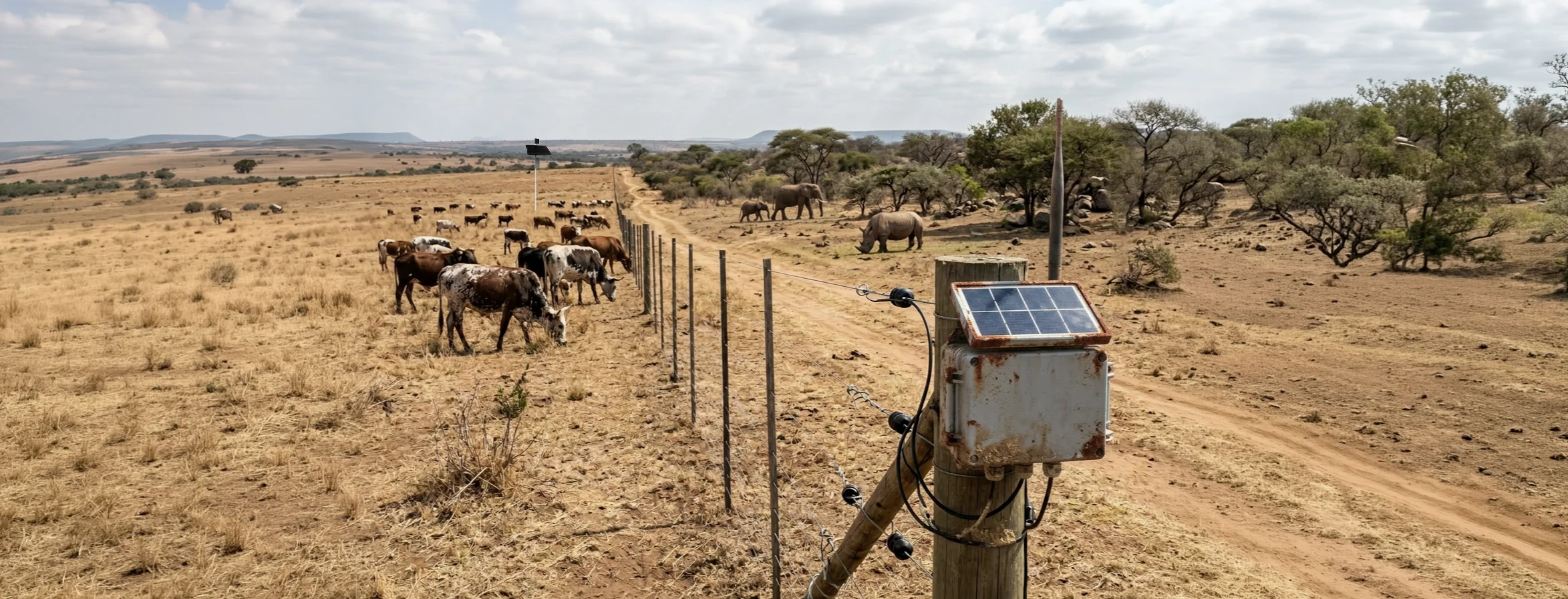
- EcoWild Net built a solar-powered LoRaWAN fence monitoring system to help farms and wildlife reserves in Namibia monitor electric fences remotely.
- The system uses RAKwireless WisBlock modules and LoRaWAN connectivity to read fence voltage in real time and send alerts when faults occur.
- Farmers no longer need to manually check long fence lines every day, reducing fuel use, labor, and time spent on patrols.
- The solution works in remote, off-grid locations with limited or no cellular coverage, making it practical for rural farms and wildlife conservancies.
- RAK3172, RAK19007, custom circuitry, RAK7240V2 Outdoor Gateway, and TagoIO work together to collect, transmit, display, and alert users about fence voltage changes.
- The pilot deployment gave farmers faster fault detection, better cattle containment, and zone-specific data for quicker repairs.
- The same electric fence monitoring setup also supports wildlife protection by helping conservancies detect fence failures before animals escape or people are put at risk.
Company Profile
In the middle of southern Africa, the land stretches wide with open skies and rugged beauty. Cattle graze across dry farmlands, while endangered species like rhinos, elephants, and lions move through protected wildlife reserves and conservancies. Their safety often depends on something as simple as an electric fence. But what happens when that fence fails, and no one knows?
This is the story of how one Namibian company, named EcoWild Net, decided to change that. Using solar power, LoRaWAN technology, and RAKwireless modules, they built a smarter solution to protect both livestock and wildlife.
The Problem
Farms in Namibia depend on electric fences to keep cattle inside their grazing areas. When the voltage stops flowing steadily, herds often wander off, graze in the wrong places, or go missing. On wildlife farms, the risk is even greater. Rhinos, elephants, and other animals need strong barriers to stay safe and to keep nearby communities and people protected.
This requires checking fences every day, which takes time, money, and energy. These fences stretch across tens of kilometers of tough landscapes, often in areas with little to no cellular coverage. Farmers have to drive for hours and use fuel and labor just to make sure the fence still works.
The problem is clear. Weather, broken wires, overgrown plants, or even animals can cause faults. And when that happens, there’s no way to know until it’s too late.
Location
Namibia, Southern Africa
The Solution
EcoWild Net is a local IoT company based in Namibia and is well aware of the difficult terrain, tech, and agricultural challenges of the place. That’s when, one day, a forward-thinking livestock farmer approached the company with a simple but powerful question.
“Can we monitor our electric fence remotely, without needing to drive around every day?”
At that point, EcoWild Net saw an opportunity to go beyond a simple voltage checker. They envisioned a rugged solar-powered monitoring system that could
- Detect fence voltage in real time
- Send alerts when faults occur
- Operate in off-grid environments
- Scale across large properties and wildlife reserves
To make this happen, they turned to LoRaWAN and the RAKwireless WisBlock ecosystem. This gave EcoWild Net a practical path for LoRaWAN remote monitoring across farms and wildlife reserves with limited cellular coverage. LoRaWAN is a wireless communication technology that uses very little power to cover long distances.
The Power of IoT Behind the Fence
The Internet of Things connects everyday equipment to smart devices that can sense, collect, and send data in real time. In this case, it turned a regular electric fence into something much smarter. With the right setup, the fence could now speak for itself. This is the kind of smart agriculture IoT that helps rural teams turn field infrastructure into useful real-time data. It could report its status, send alerts when something went wrong, and help farmers respond faster than ever before.
It wasn’t simply about connecting a wire to the Internet. It required technical equipment to make this work in the harsh and remote landscapes of Namibia. That’s where the right technology made all the difference.
LoRaWAN brought its long-range wireless technology that works with very little power in areas with low to no cell service. To turn this idea into a working system, RAKwireless offered the perfect hardware solution called the WisBlock modules. The WisBlock ecosystem helped EcoWild Net build solar-powered devices that could sense voltage and send real-time updates to the cloud.
Inside the Smart Fence System
Namibia’s farms and wildlife reserves stretch across difficult and far-stretched landscapes. This makes it difficult to keep fences in good condition every day. The usual way of checking them takes time, fuel, and effort, therefore, EcoWild Net built a smart solution that works even better and addresses off-grid location requirements. It uses less power, runs on solar energy, and helps landowners stay updated without leaving their homes. Here's how they made it happen.
| Component | Purpose and Function |
|---|---|
| RAK3172 WisDuo LoRaWAN Module | Reads the scaled-down voltage from the fence and transmits it over the LoRaWAN network. This module is ultra-low power and ideal for solar-powered environments. |
| RAK19007 WisBlock Base Board | Connects all the hardware modules and allows the system to read voltage signals using its ADC (Analog to Digital Converter) input. |
| Custom Circuitry | Connects to the high-voltage pulse of the electric fence and reduces the voltage to a safe level that can be read by the system. |
| ADC Input on WisBlock | Takes the reduced voltage from the custom circuitry and converts it into data that the RAK3172 can process. |
| RAK7240V2 Outdoor Gateway | Receives the LoRaWAN message from RAK3172 and forwards it to the cloud via an internet connection. Built to survive tough outdoor conditions. |
| TagoIO Cloud Dashboard | Displays live fence voltage readings. If the voltage drops below a set level, it sends an instant alert to the user. |
Landowners no longer need to drive around for hours to check if the fence lines are still working. The system spots issues on its own and sends alerts in real time, from anywhere.
Outcome
The system changed everything for the farmer when the first time it went live. For the first time, they had full control without needing to be there in person. The farmers received real-time alerts within minutes whenever something went wrong, a wire broke, a section got trampled, or the voltage dropped.
On the pilot farm, the RAK-powered system gave the farmer something they never had before confidence. When something goes wrong, they know within minutes. The cattle stay where they need to be, and the system also shows which part of the fence had the issue, so fixing it became quicker and easier. This made cattle monitoring more reliable across large grazing areas and, most of all, it gave peace of mind in the following terms
- No more daily fence patrols
- Fuel and labor savings
- Improved cattle containment
- Actionable and zone-specific fault data
With RAK’s reliable technology and EcoWild Net’s thoughtful design, the smart fence system gave the farmer real freedom. The solution turned fence monitoring into something automatic and stress-free.
Protecting More Than Just Livestock
After the system proved successful on farms, wildlife reserves and conservancies also showed interest. What started as a livestock monitoring system for farms also showed strong potential for wildlife protection. For these organizations, electric fences are life-saving infrastructure. Even one undetected fence failure can lead to animal escapes, road accidents, or dangerous encounters for both people and animals.
Now, this smart fence system is being tested as a tool to support wildlife protection across Namibia and southern Africa. It gives teams a better way to watch over large areas without needing more people or extra effort.
Smarter Detection with Faster Sampling
While voltage monitoring was a huge initiative forward, EcoWild Net saw room to do even more. They are now working on ways to monitor current flow through the fence to pinpoint where the fault is coming from, and not just detect it. This would drastically improve fault localization across long stretches of fencing.
They tested the RAK16001 ADC Module for this purpose. However, current pulses on electric fences move fast, often lasting just milliseconds or less. To read them correctly, they may need faster sampling or special analog circuits. It’s a tough engineering challenge, but EcoWild Net is ready to take it on.
LoRaWAN at the Edge of Innovation
This project isn’t just about voltage. It’s about building a resilient and intelligent infrastructure for the places that need it most.
- Farms without grid power.
- Wildlife reserves without internet.
- People are managing land and animals without the time or tools to patrol it all.
Thanks to EcoWild Net’s local expertise and RAKwireless’s reliable, low-power modules, LoRaWAN is helping connect the unconnected and protect what matters, across fences, fields, and frontiers.
Rural challenges demand resilient technology. And in Namibia, LoRaWAN is proving up to the task.
Getting Started
EcoWild Net’s project shows what’s possible when the right tools meet a real challenge.
Want to explore how RAK solutions can power your off-grid monitoring projects? Contact us today, and we’d love to help you build what’s next.


